
Mosaic (Jun 12)
- Amber Thiessen
- 4 minutes ago
- 6 min read

"For Christ’s love compels us, since we have reached this conclusion: If One died for all, then all died. And He died for all so that those who live should no longer live for themselves, but for the One who died for them and was raised" (2 Cor. 5:14-15).
We sat around the tables, ready to begin our morning worship time. He came around handing us each a piece of paper. In the center was a small paragraph in old style typerwriter print, titled, "Article III. The Doctrinal Basis of the Organization." Loopy calligraphy handwriting across the top: "At a meeting held Aug. 9, 1895..."
This little piece of history renewed my awe of being part of a mission organization focused on bringing the gospel to the unreached for the last 130 years. I held the photocopy in my hands, curious what this snapshot of history meant for us today.
It was a week away from their return to East Africa in 1895, when Peter Cameron Scott, William Arthur and Charles Hurlburt gathered with the rest of the Philadelphia Council to discuss an amendment to the doctrinal statement of Africa Inland Mission.
I've often wondered what is was like for those early missionaries, packing their belongings in a casket, saying goodbyes knowing they likely wouldn't see each other again on this side of heaven.
I consider the contrast to our own experience, saying goodbyes, but with the plan to return in a few years. The likelihood of a cellphone where we could call periodically and send emails when we were in the city. There was a cost, yes. But it was different.
I remember when we were a week away from leaving, I was more concerned about the weight of my luggage and whether or not I could squeeze in yet two more things, not thinking at all about the doctrinal statement!
"In great measure our motivation for risking lives so that the gospel could penetrate inland Africa was because we believed that even those who have not been reached with the gospel will be held eternally accountable for their sins." [1]
They were preparing to leave, not only in the materialistic sense of packing belongings, but also in the spiritual sense of counting the cost. They were readying to risk their very lives and now sought to remind themselves of their why, the reason for the dangerous task set before them.
They resolved, in alignment with the Scriptures, of this truth, being convinced of eternity—the eternal consequence of sin and heavenly reward of salvation. Bringing the gospel to those unreached became an urgent burden to bear.
And so, after discussion, Article III included this motivation in their doctrinal statement: "the eternal conscious existence of both the saved and lost."
"For we must all appear before the judgment seat of Christ, so that each one may receive what is due for what he has done in the body, whether good or evil" (2 Cor. 5:10).
When I walk through the grocery store, as I gaze over a crowd of parents in the gym, as I interact with colleagues and patients, am I thinking about eternal accountability for sin? Am I so convinced of eternity, of every sinner's desperate need for the gospel that an urgency grows within me?
I don't think nearly often enough.
The love of Christ compels us.
Reading through my own prayers from times past, sitting on a straw mat beneath a cashew tree, sweating with the heat of the African sun, asking the Lord for opportunities to share the good news, opportuntities to pray for others, for Him to help me make the most of every opportunity. There was urgency in my prayers.
Lord forgive me for tepid waters of my heart these days.
Taking the concrete steps to the staff entrance of our red brick hospital, I remember the needs of those I'll meet today. Moments ordained by the Lord, to provide a gospel presence, a gospel encouragement.
For those who do not know you yet, Lord, grab on to them now, and do your work. Take them by the heart, overcome them, and persuade them, until they say, “You have won. You are stronger than I.” Lord, did you not make me a fisher of men? I have worked all this time and caught nothing. Have I spent my strength for nothing? I will cast my net one more time. Lord Jesus, stand on the shore and show me how and where to spread my net. Give me the words to enclose the souls I seek, that they will have no way out. Now, Lord, for a multitude of souls. Now for a full portion. Lord God, remember me, I pray, and strengthen me, O God. Amen. —Joseph Alleine [2]
[1] Heartbeat Africa, Issue Two, 2025, p.12. Read more about the history of Africa Inland Mission in this short booklet
[2] Joseph Alleine, “O Lord, Draw People to Christ!,” in Piercing Heaven: Prayers of the Puritans, ed. Robert Elmer (Bellingham, WA: Lexham Press, 2019), 184.
📝 In Writing




📚 On My Shelf
In my travels, busy with meetings, I'm getting reacquainted with my reading list. A God-Sized Vision by Colin Hanson about the history of revivals, Hudson Taylor's Spiritual Secret, reminding me of the joys and struggles of missionary life, and Desiring God by John Piper.
For fiction, I've got Raging Waters by Dana Mentnik and The Pursuit of Civility by Jen Turano checked out from our library.
🏷️ Book Deals
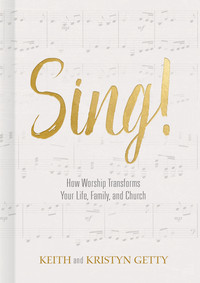
I grabbed a couple of these this week. Just to note the Christ-Centred Commentary series has a few others on sale, so if you're doing a summer bible study on another book, take a look at the series page to see if yours is on sale! I hope you’ll find something here that meets you where you are.









🗞️ In Articles
I first learned the phrase, memento mori in the book The Body Teaches the Soul. It means, "remember you will die" and at first you'll think, that's morbid. But what's more interesting is that it was spoken by a servant to the Roman general while he was parading through the streets after a victory in battle.
That's right. After victory.
Isn't the moment of success precisely when we need to remember eternity, our dependance on Christ for any blessing we experience, and our hope in life and death. Jean reminds us that thinking about death "has tremendous potential to alter the course of one's life." And, I think, to guide our purpose and meaning of our every day.
I've read a couple books lately that emphasize the doctrine of our union with Christ and what I liked is how this article shares simply and practically what this means for us.
"At its core, being in Christ reorients the direction of your life. You are no longer striving for acceptance; you are living from it. You are no longer trying to secure your identity; you are learning to live it. And the outflow of this is something wonderful: obedience. Obedience becomes a response to what Christ has done rather than a requirement for belonging. Our growth becomes a process founded in security instead of fear."
Maybe like me, you've also had that moment, going through a geneology in Scripture and you wonder what this has to do with me?
"One of the most common assumptions in the Christian life is that growth will simply happen naturally over time."
And Scripture highlights this is not the case!!
In this article, he points out we are formed though by the choices we make, and urges a return to habits of G.R.A.C.E. and gives a framework to consider. The one thing I think he missed here is a habit of accountability. He introduces the article with the grave reminder of spiritual leaders who've been caught in sin and dismissed from ministry, so when we're talking about spiritual habits, I think our neglect of regular habits of confession and repentance in the context of community, relationships where we're being mentored, where we're allowing the Word to equip, teach, rebuke and strengthen us. These reminders of the gospel and our daily need for grace in the fight against sin and temptation are so important.
And this article pairs well with the previous one, because it's good and healthy for us to acknowledge the depths of our sin, our need to confess and repent as regular spiritual disciplines. And though we might easily become overwhelmed with shame and guilt, praise be to God, His grace abounds more!
